 Zadekpedia
Jeffrey Miron is an economist who appeared as a guest on The Bob Zadek Show. Bob Zadek introduced him as a senior lecturer and director of undergraduate studies in the Department of Economics at Harvard, a senior fellow at Cato, and the author of four books, including Drug War Crimes: The Consequences of Prohibition and Libertarianism from A to Z Miron vs. Sessions on the Drug War (2017). Miron also appears in the show’s retrospective framing as one of the “economics professor rockstar” lecturers at the Cato University annual week of discussion and lectures, alongside law professor Randy Barnett Derek Khanna - What’s Stifling Innovation? (2014).
On the show
1 appearance, 2017.
- 2017-07-09 · Miron vs. Sessions on the Drug War · 51:27 — Economic failures and violence of drug prohibition.
Their books discussed on the show
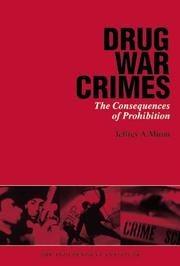
- Drug War Crimes: The Consequences of Prohibition (2004) — discussed 2017
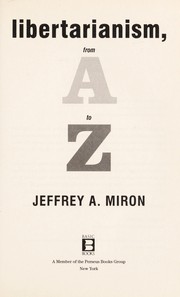
- Libertarianism from A to Z (2010) — discussed 2017
Prohibition and violence
Miron’s central argument on the 2017 episode was that the causal relationship between drugs and violence runs opposite to the one Attorney General Jeff Sessions asserted. Responding to Zadek’s question about whether drugs beget violence, Miron said Sessions had it “almost precisely backwards”: it is rare that consumption of drugs induces anyone to commit violent or other criminal acts, whereas drug prohibition induces violence. The mechanism he described is that banning a good does not eliminate supply and demand but drives the market underground, where participants cannot resolve disputes over trade, purchase and sale, and contracts through courts and lawyers, leaving violence as the obvious substitute. He illustrated this with fights over drug territories and over enforcing contracts, and with the employer who wants sellers to believe that stealing the merchandise will bring reprisals Miron vs. Sessions on the Drug War (2017).
Zadek restated the point in his own framing — that commerce in drugs is forced underground and therefore denied the civilized system of dispute resolution everyone else lives under — and tied the contrary assumption to Reefer Madness. Zadek also pressed Miron on Sessions’ stated position that the drug laws are laws and therefore must be enforced, without discussion of whether more vigorous enforcement or the laws themselves make sense Miron vs. Sessions on the Drug War (2017).
Costs of the War on Drugs
Asked by Zadek how much the War on Drugs costs, Miron gave two budgetary components. Explicit expenditures for police, judges, prosecutors and prisons come to roughly $50 billion a year, adding together state, federal and local spending. Foregone tax revenue is of a similar order of magnitude, about $40 to $50 billion a year — a change in the overall US deficit situation of $100 billion. Miron added that capturing all of it would not change the fact that the US is, in his words, currently bankrupt for all practical purposes, but that it would go in the right direction and would improve the welfare of people who use drugs, reduce crime and reduce corruption Miron vs. Sessions on the Drug War (2017).
Harm reduction
A caller identified as Nick, a research scientist working on drug development, asked about harm reduction and about data from countries that had legalized some drug. Miron answered that an enormous amount of harm can be reduced by legalizing drugs, because a huge fraction of the harms come not from use of the substance per se but from using it under prohibition. His example was injection: prohibition raises prices, giving users a strong incentive to consume in the manner that delivers the most effect for the money, while laws in most states make it impossible to buy clean disposable syringes over the counter, so users share needles and risk HIV, hepatitis C and other blood-borne diseases. Zadek reminded listeners that Miron had earlier pointed to cigarettes as experience with reducing harm without prohibition, which Miron called an excellent point Miron vs. Sessions on the Drug War (2017).
Miron was skeptical of coercive harm-reduction measures such as sin taxes, arguing that deciding which behaviors to discourage requires data that will never be available — whether excessive alcohol, or staying up late watching television and then driving exhausted, is the greater net harm. Non-coercive measures such as public service messages and health education in high school, he said, probably do not do great harm and he could live with them as a cost of legalization Miron vs. Sessions on the Drug War (2017).
International and state evidence
On the caller’s second question, Miron said there are far fewer countries to examine than one would like, because not many have gone from prohibition to legalization — partly because of US pressure toward maintaining prohibition worldwide and partly because of UN treaties the US supports. He named Portugal, to some degree the Netherlands, and several US states that have legalized marijuana, along with countries that have de-escalated their wars on drugs without legalizing or medicalizing. The evidence, he said, is incredibly consistent and consistent with the libertarian view: none of the horror stories painted by drug warriors — booms in drug use or crime — has come true. Changes have been almost always beneficial, with use rates staying the same or going down and crime and HIV infection rates going down Miron vs. Sessions on the Drug War (2017).
Prison guard unions
A caller identified as Steve asked Miron to comment on the influence of prison guard unions on drug laws. Miron said he had not thought specifically about prison guard unions, but that many people have commented on the private prison movement as a factor in the high US incarceration rate and in continuing the War on Drugs, which made sense to him, though the escalation of the War on Drugs long predates the private prison boom. Zadek added from California that the prison guards union there is the strongest public service union in the state and successfully fought the decriminalization of marijuana when it was on the ballot, opposing decriminalization because it is bad for business Miron vs. Sessions on the Drug War (2017).
Across episodes
Miron appears in two episodes: the 2014 episode, where Zadek names him among the Cato University lecturers, and the 2017 episode, where he is the sole guest on drug policy. The episodes show no development in his positions between them; the earlier episode supplies only the fact of his lecturing, and the later one carries the argument.