 Zadekpedia
Gene Healy, a Vice President at the Cato Institute, appeared on The Bob Zadek Show to discuss the constitutional and historical nature of impeachment. Across multiple episodes he examined the Founders’ intent, the standards for “high crimes and misdemeanors,” and the specific cases of Andrew Johnson, Alcee Hastings, Richard Nixon, and Donald Trump. His book Impeachment: The Indispensable Remedy and a related article in Reason magazine framed much of the conversation.
On the show
2 appearances, 2018–2019.
- 2018-12-30 · Low Tweets and Misdemeanors: The Impeachment Debate Through the Lens of History and the Constitution · 51:44 — Constitutional history and legal standards of impeachment.
- 2019-12-19 · Which Impeachment Movie Are You Watching? · 52:09 — Historical and legal nuances of presidential impeachment.
Their books discussed on the show
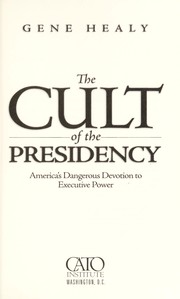
- The Cult of the Presidency: America’s Dangerous Devotion to Executive Power (2008) — discussed 2018
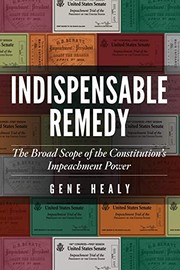
- The Indispensable Remedy (2018) — discussed 2019
Impeachment as a remedy, not a criminal trial
Healy’s central argument was that impeachment is not a criminal proceeding. In a Senate trial, he said, “it doesn’t, as in a criminal trial, put somebody’s life or liberty at risk,” and the ultimate remedy is removal from office. Because the consequences differ, he argued it makes sense that the burden of proof is lower than in a criminal trial: when an official can “do a great deal of damage to ordinary citizens’ rights,” the showing required should be less demanding than beyond a reasonable doubt Low Tweets and Misdemeanors: The Impeachment Debate Through the Lens of History and the Constitution (2018).
He illustrated the distinction with the case of federal judge Alcee Hastings of Florida, who was acquitted in a bribery trial but subsequently impeached and removed from the bench. Healy noted that Hastings later won election to Congress. The contrast, he said, shows that the criminal process and the impeachment process are “two different procedures” with different consequences Low Tweets and Misdemeanors: The Impeachment Debate Through the Lens of History and the Constitution (2018).
The Founders and the danger of a singular executive
Healy grounded the impeachment power in the Constitutional Convention. He noted that the bulk of the convention’s discussion of impeachment concerned the presidency, and that the longest debate on the power, on July 20th, was entirely with reference to impeaching the president. James Madison, Healy said, argued that impeachment was indispensable because the presidency is the one office headed by a single man; while the “multiplicity of members” dilutes the damage a corrupt judge or congressman can do, incapacity or perfidy in the presidency “could be fatal to the republic” Which Impeachment Movie Are You Watching? (2019).
Healy extended that logic to the modern office. If the Founders viewed the presidency as uniquely dangerous because one person heads it, he argued, that concern “only becomes even more compelling when the office gains all the vast new powers it’s gained over the course of more than a century.” He rejected the argument that the presidency has become too indispensable to remove, saying that if the one official who “has nuclear weapons and controls the federal law enforcement apparatus” is unfit, that is a continuing danger Which Impeachment Movie Are You Watching? (2019).
The Zelensky phone call
In a later episode, Bob Zadek posed a hypothetical: if Donald Trump had evidence that Joe Biden committed treason and asked Ukraine’s president to investigate, would that be impeachable? Healy said no in that hypothetical, arguing that such an investigation would normally be handled by Justice Department prosecutors, not by the president in a diplomatic meeting. He then offered a counter-hypothetical—Trump asking Zelensky to license a Trump Towers in Kyiv in exchange for military aid—which he said people would recognize as a corrupt abuse of office Which Impeachment Movie Are You Watching? (2019).
Andrew Johnson and the Tenure of Office Act
Healy discussed the 1868 impeachment of Andrew Johnson, who was accused of violating the Tenure of Office Act by firing cabinet officials without the advice and consent of the Senate. He noted that most of the eleven articles of impeachment rested on that statute, but that Article X instead accused Johnson of bringing the presidency into scandal and disrepute through a series of inflammatory speeches on the campaign trail in 1866. Zadek characterized this as the 1868 equivalent of sending early morning tweets, and Healy agreed Low Tweets and Misdemeanors: The Impeachment Debate Through the Lens of History and the Constitution (2018).
Healy emphasized that the Tenure of Office Act was itself “clearly unconstitutional” as an intrusion into the operation of the executive, so the only crime Johnson was alleged to have committed was violating an unconstitutional law. Johnson escaped conviction in the Senate by one vote. Healy cited this as evidence against Gerald Ford’s famous statement that “an impeachable offense is whatever Congress decides it is at a given moment in history”—if charges are legally dubious, he said, an impeachment is much more likely to fail Low Tweets and Misdemeanors: The Impeachment Debate Through the Lens of History and the Constitution (2018).
Partisanship and the burden of impeachment
Zadek proposed that impeachment is constitutionally suspect unless bipartisan. Healy disagreed, noting that every presidential impeachment has been partisan, and that even in Nixon’s case a majority of Republicans on the House Judiciary Committee voted against all three articles. Setting a standard of perfect bipartisanship, he said, would mean fewer presidential impeachments than have occurred. He did allow that some buy-in from the president’s party is needed to demonstrate fairness Low Tweets and Misdemeanors: The Impeachment Debate Through the Lens of History and the Constitution (2018).
Across episodes: the hysteria thesis
The episodes show a consistent theme across the 2018 and 2019 episodes: Healy’s argument that impeachment is not a national trauma. In the 2019 episode he said he wanted to “throw cold water on all the hysteria over impeachment,” arguing that historically it has not paralyzed government, wrecked the economy, or done serious harm, and that in 1974 it did a lot of good. He attributed the outsized emotional reaction to “the cult of the presidency” Which Impeachment Movie Are You Watching? (2019). The 2018 episode covers the historical and constitutional framework; the 2019 episode extends it to the contemporary proceedings against Trump. The episodes show no development in Healy’s position between the two.