 Zadekpedia
David Boaz was a guest on The Bob Zadek Show in two episodes, both centered on his book The Libertarian Mind: A Manifesto for Freedom. At the time of the 2015 appearance he was Executive Vice President of the Cato Institute, a position he still held in 2018. The conversations range from first principles—what libertarianism is and is not—to applied questions of welfare, private property, and political tribalism.
On the show
2 appearances, 2015–2018.
- 2015-04-04 · David Boaz on The Libertarian Mind · 52:39 — Core principles and history of libertarianism.
- 2018-04-19 · David Boaz on the Libertarian Ethos · 51:59 — Core principles of libertarianism and individual rights.
Their books discussed on the show
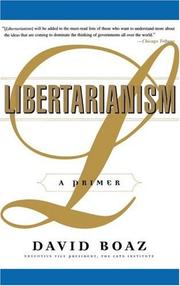
- Libertarianism: A Primer (1997) — discussed 2015, 2018
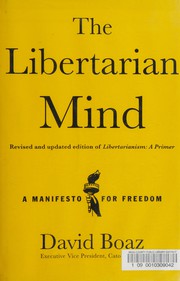
- The Libertarian Mind: A Manifesto for Freedom (2015) — discussed 2015, 2018
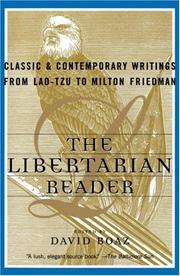
- The Libertarian Reader (1998) — discussed 2015
Defining libertarianism
In the 2015 episode, Bob Zadek introduced libertarianism as a moral, economic, and ethical philosophy with a rich philosophical history, and asked Boaz whether that summary was fair. Boaz agreed in part but drew a distinction: libertarianism, he said, is a political philosophy, not a complete philosophy of life, and not an ethical guide to how to live. It has little to say about how one should treat a spouse or business partner, except that one should not use coercion against them. David Boaz on The Libertarian Mind (2015)
Boaz summed up the rule libertarianism proposes for living together in kindergarten terms: don’t hit other people, don’t take their stuff, and keep your promises. If people do those things, he said, society will have peace, social harmony, and economic growth. Libertarianism, in his formulation, is the philosophy of freedom, concerned with the relationship between the individual and the state, and it holds that people should be free to live their lives as they choose so long as they respect the equal rights of others. David Boaz on The Libertarian Mind (2015)
Zadek pressed the point that libertarianism is not per se an economic system, though living according to it produces wealth and opportunity. Boaz agreed, noting that libertarians arrive at their views by different routes. Some come through a belief in individual rights—holding it wrong to treat human beings as merely means and not ends, or to use force to require others to make choices they would not otherwise make. Others come through economics, finding that simple rules respecting property rights and market exchange yield a well-functioning and growing economy. David Boaz on The Libertarian Mind (2015)
The Cato Institute and the book’s purpose
Asked about the Cato Institute in the 2015 episode, Boaz described it as a non-partisan, independent libertarian think tank that studies and publishes on public policy issues from education to taxes to foreign and defense policy. He said it was supported by 15,000 individual contributors and had a staff of about 40 scholars, with a blog at Cato.org, and that its goal was to increase public understanding of the ideas of freedom and limited government. David Boaz on The Libertarian Mind (2015)
Boaz said he wrote The Libertarian Mind with three purposes: to give libertarians a deeper understanding of their own philosophy, to provide a book libertarians would want to give to friends and family curious about the term, and to reach the millions of Americans he believed were basically libertarian—people who consider themselves fiscally conservative and socially liberal, who believe in a dynamic economy and think gay marriage is fine, who think government taxes too much and see no reason to jail people for smoking marijuana. David Boaz on The Libertarian Mind (2015)
Welfare, charity, and private property
On wealth transfers, Boaz identified both a moral problem—taking money from people by force and giving it to others—and a social problem: people can stay on government programs for years and decades, which he did not consider a satisfying life. He argued the question should be how to get people better lives, through a stronger market economy and a system of charity that would be larger if people had more money in their pockets to give. Charity, he said, tends to be more local, more decentralized, and more focused on helping individual families get their lives together rather than simply giving them money. David Boaz on The Libertarian Mind (2015)
He extended the point to foreign aid, saying that while the instinct to send money and food to starving people is noble, it would be better if the people of Africa did not need baskets of food from the United States. What Africa needs, he said, is free markets, private property, and the rule of law—systems allowing people to work, produce, and trade. If a government is rapacious and takes most of what you produce, he asked, what is the point of fishing? David Boaz on The Libertarian Mind (2015)
In the 2018 episode, a caller raised Robert Wenzel’s book Foundations of Private Property Society, whose premise the caller described as being that the only structure in private property society is respect for private property. Boaz said he was not familiar with the book but affirmed that private property is an important part of civilization. Without a piece of property one can call one’s own, he said, you cannot have farming—no one will plant a crop or build a shack without knowing the property is theirs. Societies that tried to abolish private property, notably the Soviet Union and other communist countries, found themselves economic basket cases, a pattern he said was visible in Venezuela and in Russia, China, and the countries the Soviet Union conquered. David Boaz on the Libertarian Ethos (2018)
Tribalism and the arrogance of power
In 2018, Zadek asked about tribalism. Boaz described it historically as the idea that one can only trust people close to you or like you—family, village, community, nation, religious or racial group—and said that in modern America it has become a kind of political tribalism in which people line up on the red team or the blue team and distrust the other side. He traced the worsening to the Monica Lewinsky scandal and the attempted impeachment of President Clinton around 1998, the 2000 election and the Florida vote, the Bush and Obama years, the rise of the Tea Party, and the rise of Trump. For libertarians, who reject some ideas of the right and some of the left, he said, this makes it difficult to get a hearing. David Boaz on the Libertarian Ethos (2018)
Zadek argued that the non-libertarian view rests on hubris—the belief that someone with power knows better how you ought to organize your life than you do—and that this arrogance thrives on instilling fear, which fuels populism and the rise of a strongman savior. Boaz agreed that the organization of fear is one way government is built up: if people feel they cannot handle problems such as street crime, the dangers of the 1%, or immigrants coming across the border, they may flee to someone promising protection. He said Trump’s 2015 and 2016 campaign was almost entirely about fear of others—fear of crime, immigrants, and foreign trade. David Boaz on the Libertarian Ethos (2018)
Across episodes
Both episodes return to the same foundational question—what libertarianism is and what it demands—but the treatment shifts. In 2015, Boaz is chiefly occupied with definition and with the book’s audience, explaining libertarianism as a political philosophy of non-coercion and describing the Cato Institute’s mission. By 2018, with the book behind him, the conversation turns to diagnosis: tribalism, the arrogance of power, and the use of fear, with Boaz naming the Lewinsky scandal, the 2000 election, and the Trump campaign as markers. The 2018 episode also adds private property as an explicit theme, prompted by a caller’s question about Wenzel’s book. Zadek advances the fear-and-hubris framing in 2018; Boaz supplies the historical narrative in both.