 Zadekpedia
Clark Neily is the Vice President for Criminal Justice at the Cato Institute and a scholar of constitutional law, over-criminalization, civil forfeiture, police accountability, and gun rights. He is the author of Terms of Engagement: How Our Courts Should Enforce the Constitution’s Promise of Limited Government and contributed a chapter to Libertarianism.org’s Visions of Liberty. He appeared twice on The Bob Zadek Show in July 2022 to discuss the Supreme Court’s term, the Dobbs decision, and the doctrines of qualified and absolute immunity. Dobbs, the Democratization of Rights, and the Disaster of Qualified Immunity (2022)
On the show
2 appearances, 2020–2022.
- 2020-06-10 · An Unprecedented Opportunity to Revisit Unqualified Immunity · 52:01 — Qualified Immunity and Police Accountability Reform.
- 2022-07-08 · Dobbs, the Democratization of Rights, and the Disaster of Qualified Immunity · 51:50 — Constitutional implications of the Dobbs decision and judicial immunity.
Their books discussed on the show
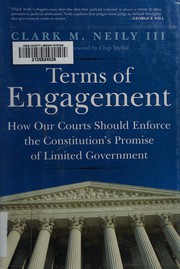
- Terms of Engagement: How Our Courts Should Enforce the Constitution’s Promise of Limited Government (2013) — discussed 2020, 2022, 2022
Dobbs and the constitutional status of abortion
Neily explained that Dobbs v. Jackson Women’s Health Organization held that there is no constitutional right to an abortion, overruling roughly 50 years of precedent beginning with Roe v. Wade, which had held that there is a constitutional right to an elective abortion. Five justices concluded that reading is not a plausible way to read the Constitution, and therefore Roe and Casey had to be overturned. Dobbs, the Democratization of Rights, and the Disaster of Qualified Immunity (2022)
Asked by Bob Zadek whether it was an overstatement to say Roe created a right to abortion, Neily distinguished enumerated from unenumerated rights. He noted that the right to travel around the United States and the right to guide the upbringing of one’s own children are nowhere mentioned in the text of the Constitution yet have been enforced by the Supreme Court—the latter for over a hundred years. The question, he said, is whether the court “invent[s]” such rights or “recognize[s]” them as among the unalienable natural rights we all possess. On abortion, Neily said some people think the ability to terminate a pregnancy is among those natural rights and others think it is not; he and his colleague Jay Schweikert argued in a Cato blog piece that reasonable libertarians can see it either way, with powerful arguments and powerful objections on both sides. Dobbs, the Democratization of Rights, and the Disaster of Qualified Immunity (2022)
Zadek framed the decision as ending 50 years of what he called a Supreme Court-created abortion regime, and he pushed back on pundits and elected officials who described the ruling as taking away the right to an abortion or as the end of democracy. Neily’s own summary was narrower: the decision held there is no constitutional right to abortion, and the five justices found no plausible textual basis for one. Dobbs, the Democratization of Rights, and the Disaster of Qualified Immunity (2022)
Qualified and absolute immunity
In the same episodes, Neily turned to the immunities that shield government officials from civil suits. He described qualified immunity as turning on whether the plaintiff can show the official was on very specific notice of the specific act at issue—that is why it is qualified. Absolute immunity, by contrast, is the gold standard, and it covers two vocations: prosecutors and judges. Neily attributed this to a judiciary “wildly disproportionately composed of former prosecutors,” observing that the surest way in America to become a judge is first to be a prosecutor. Dobbs, the Democratization of Rights, and the Disaster of Qualified Immunity (2022)
Neily called the rationale for prosecutorial immunity “preposterously sophomoric.” As he summarized the Supreme Court’s position, there are other ways to hold prosecutors accountable for misconduct—which