 Zadekpedia
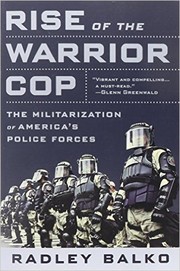
Radley Balko is an investigative reporter and the author of The Rise of the Warrior Cop, subtitled The Militarization of America’s Police Forces. He appeared on The Bob Zadek Show as a full-hour guest and was also heard in an audio clip on an earlier episode about civil asset forfeiture. Bob Zadek introduced him as a senior writer and investigative reporter for the Huffington Post, cited in two US Supreme Court cases for his investigative journalism, a writer for Reason magazine, and a former policy analyst at Cato Posse Comitatus – Repealed but Not Gone (2013).
On the show
1 appearance, 2013.
- 2013-10-26 · Posse Comitatus – Repealed but Not Gone · 8:44 — The Militarization of American Police Forces.
Their books discussed on the show
- Rise of the Warrior Cop (2013) — discussed 2013, 2014
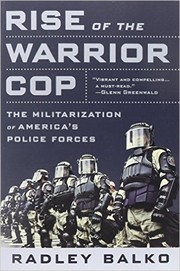
- The Rise of the Warrior Cop (2013) — discussed 2013, 2020
Civil asset forfeiture (2011)
Balko first reaches the show through a clip played during an episode on civil asset forfeiture. In it he describes how forfeiture money is spent, citing a district attorney’s office in Texas that used forfeiture money to buy an office margarita machine that won first place at a county fair margarita competition, and another Texas district attorney who used forfeiture money for a junket to Hawaii for a conference on asset forfeiture. Asked how he could do this, the district attorney’s response was that a judge had signed off on it; Balko adds that the judge who signed off went with him on the junket Cops Are No Better Than Criminals (2011).
Bob Zadek used the clip to illustrate the “law enforcement purposes” loophole, telling guest Mike Riggs that the margarita machine was found to be comfortably within law enforcement purposes because it increased police department morale. Riggs responded that if an activity is legal in the private sector, some police chief or district attorney somewhere is trying to figure out how to do it Cops Are No Better Than Criminals (2011).
The militarization of policing (2013)
Balko’s own episode opens with Bob Zadek’s framing: the founders vested the police power in the states and communities, there was never to be a federal police force, and the Posse Comitatus Act of 1878 ended the use of the US military to enforce state laws. Bob asked whether local police now look like the military, act like the military, and carry out missions dictated by Washington Posse Comitatus – Repealed but Not Gone (2013).
Balko agreed that the case is not overstated. He argued that while the US has mostly kept the military out of domestic law enforcement, the country now has domestic police officers who look and act and are armed like soldiers. He listed the transfers: the weapons of soldiers, equipment such as tanks and armored personnel carriers and helicopters, uniforms—many departments switching from police blues to battle dress uniforms, or BDUs—and training in military tactics with SWAT raids and military lingo. He added that police are regularly told they are fighting wars on drugs, crime or terrorism. Where a soldier’s job is to annihilate a foreign enemy and a police officer’s job is to keep the peace and protect rights, treating cops as soldiers blurs that distinction, so that officers come to see their streets as battlefields and the people they serve as potential enemies or threats Posse Comitatus – Repealed but Not Gone (2013).
Bob Zadek put to him that the core relationship between protector and protected had changed, and that he had once felt better with police around. Balko cautioned against romanticizing a time that may never have existed, suggesting there probably was a time when people like Bob did not fear the police—at which point the excerpt breaks off Posse Comitatus – Repealed but Not Gone (2013).
Across episodes
Balko’s work recurs across the run without his argument changing. In the 2011 forfeiture episode he appears only in a clip, supplying anecdotes about misspent forfeiture money; in 2013 he is the full-hour guest, developing the militarization thesis in his own voice. Later episodes invoke him rather than host him: in a 2014 episode Bob Zadek tells guest Alice Goffman that he had recently had Balko on to discuss the militarization of police forces, which he calls quite scary, and Goffman replies, “Right, right, his work, yeah” Alice Goffman on Fugitive Life in an American City (2014). In a 2018 episode on Scorched Worth, Bob Zadek again cites Balko, this time for a book about police stealing people’s property, in the course of drawing a parallel between civil asset forfeiture and an off-the-books fund at Cal Fire 3 (2018). The episodes show no development in Balko’s position between the earlier and later treatments; what changes is his role—clip, then guest, then citation.