 Zadekpedia
Harvey Silverglate is an attorney who appeared on The Bob Zadek Show in two episodes: a 2011 discussion of free speech on college campuses, and a 2022 discussion of the FBI. In the earlier episode Bob Zadek introduced him as chairman and founder of FIRE, the Foundation for Individual Rights in Education, and as a guest making his second appearance on the program Is Your Alma Mater a Soviet Gulag? (2011). Zadek said Silverglate had litigated against the government in general and the FBI in particular The FBI: Our Uninvited Federal Police Force (2022).
On the show
2 appearances, 2011–2022.
- 2011-09-17 · Is Your Alma Mater a Soviet Gulag? · 50:12 — Erosion of free speech on college campuses.
- 2022-11-30 · The FBI: Our Uninvited Federal Police Force · 55:33 — Abolishing the FBI and federal criminal code reform.
Their books discussed on the show
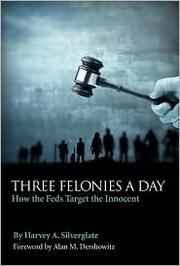
- Three Felonies a Day (2009) — discussed 2011, 2014, 2022
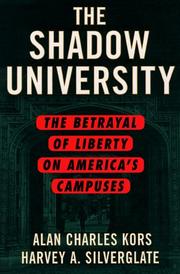
- The Shadow University: The Betrayal of Liberty on America’s Campuses (1998) — discussed 2011
Campus speech and the First Amendment
Silverglate distinguished public from private universities. The First Amendment, he said, protects student speech on public campuses because for constitutional purposes they are considered the government; that is not true on private campuses, where free speech is instead protected by academic freedom, “a principle known as academic freedom, which all modern liberal arts universities ascribe to.” Punishing a student for speech there, he argued, is a promise broken and a contract between college and student broken Is Your Alma Mater a Soviet Gulag? (2011).
Zadek maintained that free speech is guaranteed only against government, not on campus, in the workplace or in a movie theater; Silverglate agreed with that framing, though he amended it to note that the First Amendment does reach students at public universities. Zadek raised an objection of his own — that academic freedom flows to faculty rather than students — and Silverglate answered that courts have in many cases held that it flows to students too, because college handbooks frequently say the institution respects the free speech of its students. Once a college says that, he said, “we’re able to latch onto those promises to some degree,” though he called the protection less certain and less strong than at a public university, and said it is ignored by well over 50% of university administrations.
Speech codes and FIRE
Silverglate described FIRE’s rating system, which sorts campuses into red light schools with very restrictive speech codes, green light schools that allow free speech, and yellow light schools with some restriction short of total. He said many people use the ratings as a guide for giving, and some as a guide for where to send or avoid sending their children. Zadek, for his part, told listeners they could check whether their alma mater is on the good side of the free speech issue at thefire.org and encouraged withholding donations accordingly.
Accusations of “harassment,” Silverglate said, were a disguise for other charges. He recounted a student janitor at Purdue, Mr. Sampson, who was reading a mainstream inspirational book with a picture of a Ku Klux Klan member on its cover and was accused of racial harassment for upsetting a black person who saw him carrying it. He was convicted; the story reached a Wall Street Journal columnist, and after alumni and reporters began calling and writing, the university acquitted Sampson, publicly apologized to FIRE and said it would not happen again — though, Silverglate noted, it never apologized to the student. “We did win that one,” he said, “but only because we got national press.” He also discussed a case involving a University of Wisconsin faculty senate vote to repeal the speech code there, which he said turned on an electric speech by a gay student arguing that knowing what people thought of him was useful and that a code would leave him untrained for the real world; the code was repealed.
On the question of whose speech is stifled, Zadek asked whether free speech restrictions are directed more at speech from the right, and Silverglate said he was not overstating it, though there had been a minority of instances in which students from the right were censored. Faculties and administrators, he said, are generally from the left, and he divided the left into a libertarian left that believes in free speech and an ascendant authoritarian left he called threatening and anathema.
Zadek raised a case at St. Augustine’s College: a student named Roman Caple posted a negative comment about the university on its public Facebook page after a tornado and was punished for, as Zadek read it, a “negative social media exchange.” Zadek said Caple had to turn over his cap and gown to the security office and could not graduate publicly with his colleagues. Silverglate recalled the complaint concerned the school’s mishandling of the tornado, and argued there is a social interest in students talking about administrative failure in dealing with such an event.
The FBI and the federal criminal code
A decade later, Silverglate’s target was the FBI. Asked whether he used the word “police” deliberately, he said he chose the term carefully and intentionally: “They are police. They don’t have uniforms, they wear suits, but they are policemen enforcing a federal criminal code that never should have been allowed to grow to what it is now.” He summarized his book Three Felonies a Day as the claim that the average American, knowingly or not, commits about three felonies a day going about daily life The FBI: Our Uninvited Federal Police Force (2022).
Silverglate also attributed the destruction of federalism in the United States to the Civil War and to slavery, arguing that the notion of states’ rights was blackened because one of the things the Southern states did was keep slaves, but that this does not mean states should lack powers the federal government does not interfere with. Zadek closed by likening the FBI’s position to that of the CDC, which he said was created to provide information and research on communicable diseases but whose last official act in COVID was a national eviction moratorium.
Across episodes
The two episodes share a civil-liberties argument — a government or institution that oversteps against the individual — applied on one occasion to campus administrations and on another to a federal agency.