 Zadekpedia
Baylen Linnekin is the executive director of the Keep Food Legal Foundation. He appeared on The Bob Zadek Show in 2015 to discuss food freedom and in 2022 to discuss food waste. In the 2015 episode, host Bob Zadek introduced him as executive director of the foundation and, later in the same broadcast, as its executive director and founder. Baylen Linnekin on the Front lines of the Fight for Food Freedom (2015)
On the show
2 appearances, 2015–2022.
- 2015-06-27 · Baylen Linnekin on the Front lines of the Fight for Food Freedom · 52:17 — Food freedom and government regulation of food.
- 2022-06-13 · Food (Waste) Freedom · 52:48 — Government regulation of food and SB 1383.
Their books discussed on the show
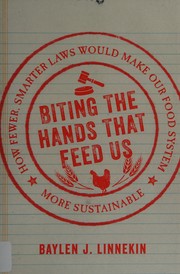
- Biting the Hands that Feed Us: How Fewer, Smarter Laws Would Make Our Food Systems More Sustainable (2016) — discussed 2022
The Keep Food Legal Foundation
Asked what motivated the foundation and what its mission is, Linnekin said there is an obvious need for it because, regardless of what you like to eat, some government employee or elected official wants to make sure you can’t eat it. He said he characterizes the organization either as a “Food ACLU” or, for Zadek’s audience, a “Food NRA.” Its premise, he said, is that people’s food choices should be defended: the person who shops at the farmers market and the person who shops at 7-Eleven have equal rights to consume food, and government shouldn’t pick winners and losers through policies that skew food choices. The mission, he said, is to protect an individual’s right to grow, raise, produce, buy, sell, share, cook, eat, and drink the foods of their own choosing, which he called his definition of “food freedom.” Baylen Linnekin on the Front lines of the Fight for Food Freedom (2015)
Linnekin said government has several motivations for regulating food, including public health reasons, which he called alleged, animal rights and animal welfare, and revenue-raising. He said he supports limited government rather than no government, and that keeping cyanide out of the food supply is a legitimate role for government. Baylen Linnekin on the Front lines of the Fight for Food Freedom (2015)
Soda taxes and warning labels
On soft drinks, Linnekin said Berkeley passed the first soda tax in the nation, adding approximately $1.50 to the cost of a six-pack, with the money going into the city’s general fund. He compared the tax to lotteries, which he said act as a tax on the poor because low-income Americans buy the bulk of lottery tickets. Baylen Linnekin on the Front lines of the Fight for Food Freedom (2015)
Discussing warning labels versus bans, Linnekin invoked the saying that the dose makes the poison, noting that drinking too much water kills people every year. He cited raw milk as an example: if every person who consumed raw milk got sick because it always contained pathogens, government would have a good case to consider banning it, but that is not the case, and yet raw milk is banned in interstate commerce and in many states, with loopholes such as buying it as pet food. He cited Randy Barnett, a law professor at Georgetown University whose work he admires, and Barnett’s idea that government should presume we have a right and bear the burden of demonstrating where we do not. Baylen Linnekin on the Front lines of the Fight for Food Freedom (2015)
Foie gras and the Dormant Commerce Clause
Answering a caller from Boston, Linnekin described foie gras as a luxury food made from the fattened liver of a duck or goose, and said California passed a ban on producing foie gras several years earlier and then said it could not be imported from other states. He said the motivation was an animal rights and animal welfare argument that the product is cruel. He said the ban took effect, he believed, in 2012, and was immediately challenged by several groups, including a lead plaintiff in Quebec that raises geese or ducks for foie gras and Hudson Valley Foie Gras, which he believed to be the country’s largest producer, based in New York State. Baylen Linnekin on the Front lines of the Fight for Food Freedom (2015)
Linnekin said the plaintiffs argued California had no power to regulate what was going on in New York or Canada under the Dormant Commerce Clause, and that he supported the lawsuit in principle and in fact. He said the US District Court, he thought in Los Angeles, found for the plaintiffs and lifted the ban, and that the case was then before the Ninth Circuit on appeal. He said he saw no possibility of the ban being revived, calling it facially unconstitutional and vague, and noted that the ban does not even mention the words “foie gras.” Baylen Linnekin on the Front lines of the Fight for Food Freedom (2015)
Horne v. USDA
Zadek raised a Supreme Court decision handed down that week that reversed the Ninth Circuit, involving what he called the most heroic raisin grower there ever was. Linnekin said the Hornes are a couple in California who, as the USDA defines it, handle raisins. He described a USDA program called the Raisin Administrative Committee, in place since the New Deal era, under which handlers must turn over a significant portion of their crop for the privilege of doing business. Zadek said the committee’s job is to manage the retail price of raisins, with excess raisins turned over so prices remain high and profits later shared with growers. Linnekin agreed that was an accurate telling and said similar programs exist for other fruits and vegetables and for spearmint oil. Baylen Linnekin on the Front lines of the Fight for Food Freedom (2015)
Linnekin said the Hornes had nearly half their raisin crop, worth hundreds of thousands of dollars, ordered seized, and that they claimed an unconstitutional taking under the Fifth Amendment’s Takings Clause and sued. He described the case’s trajectory from the Ninth Circuit to the Supreme Court and back again. Zadek recounted that in the first round the government said the Hornes had to pay a fine of about three-quarters of a million dollars before contesting the taking, and the Supreme Court said the government cannot require paying the fine first as a condition of getting into court. Linnekin said the Court that week ruled that personal property such as raisins is protected the same way real property like your home is protected by the Takings Clause, and that the Raisin Administrative Committee is now in shaky constitutional territory. Baylen Linnekin on the Front lines of the Fight for Food Freedom (2015)
Across episodes
The 2015 and 2022 episodes both take up food freedom, but the episodes show no development in the argument: the 2015 episode supplies the foundation’s mission and the soda tax, foie gras and Horne discussions, while the 2022 episode turns to California’s SB 1383, school lunch programs, food labeling and food waste. Food (Waste) Freedom (2022)